

Table of Contents
How Does Corporate Gifting Work?
Introduction: The Mechanics of Professional Appreciation
In the sophisticated business ecosystems of Hyderabad—where the technological prowess of HITEC City meets the established industrial strength of Jeedimetla—corporate gifting has evolved into a precision-engineered brand tool. For many organizations, the question isn’t just about what to give, but rather, “How does corporate gifting work?“ on a structural and strategic level.
At its core, corporate gifting is the intentional process of sending a physical or digital touchpoint to a client, employee, or prospect to create a meaningful connection. Unlike personal gifting, which relies on spontaneous emotion, corporate gifting is a lifecycle. It involves objective setting, budget allocation, vendor selection, branding, and complex logistics. When implemented correctly, it serves as a silent brand ambassador that strengthens B2B relationships and bolsters internal culture. This guide deconstructs the operational mechanics of gifting to help HR professionals and brand managers transition from random acts of kindness to a scalable, ROI-driven strategy.

What is Corporate Gifting?
Corporate gifting is a strategic business practice where an organization sends tangible or experiential items to employees, clients, or partners. It functions as a form of brand communication designed to express gratitude, reinforce professional relationships, celebrate milestones, or improve brand recall through personalized, high-quality mementos.
Why Corporate Gifting Matters to Modern Brands
1. Humanizing the Digital Interface
In an era of Zoom calls and automated emails, a physical gift is a “pattern interrupt.” It provides a tactile experience that digital communication cannot replicate. For a brand, this is the most effective way to stay “top of mind” in a crowded marketplace.
2. Reinforcing Corporate Values
The choice of gift reflects the company’s ethos. For instance, gifting sustainable bamboo tech kits signals a commitment to ESG (Environmental, Social, and Governance) goals. This alignment builds trust with modern stakeholders who prioritize ethical consumption.
3. Driving the Reciprocity Principle
Psychologically, receiving a thoughtful gift triggers a desire to reciprocate. In a business context, this manifests as increased employee productivity, higher client retention rates, and a greater likelihood of contract renewals.
How Does Corporate Gifting Work? The Lifecycle
Implementing a corporate gifting program involves a five-stage operational framework.
Phase 1: Objective and Audience Mapping
Every gift must have a “Why.” Are you onboarding new hires in Gachibowli? Are you thanking a long-term client in Jubilee Hills? Defining the audience determines the budget and the “vibe” of the gift.
Phase 2: Budgeting and Compliance
Corporate gifting must adhere to internal compliance and tax laws. Most professional firms set price ceilings to ensure the gift is perceived as appreciation, not an unethical inducement.
Phase 3: Sourcing and Customization
This is where you partner with a specialist like VsorsTech. Sourcing involves selecting high-quality products that can be personalized—typically through laser engraving or blind embossing—to ensure the brand logo is presented with prestige.
Phase 4: Logistics and Kitting
The “Kitting” process involves assembling multiple items into a cohesive, branded box. Logistics in Hyderabad can be complex; a strategic partner handles individual fulfillment, ensuring gifts reach remote employees’ homes or client offices in pristine condition.
Phase 5: Impact Measurement
Successful brands track the results. This could be through an increase in LinkedIn mentions (organic employer branding) or feedback from client relationship managers.
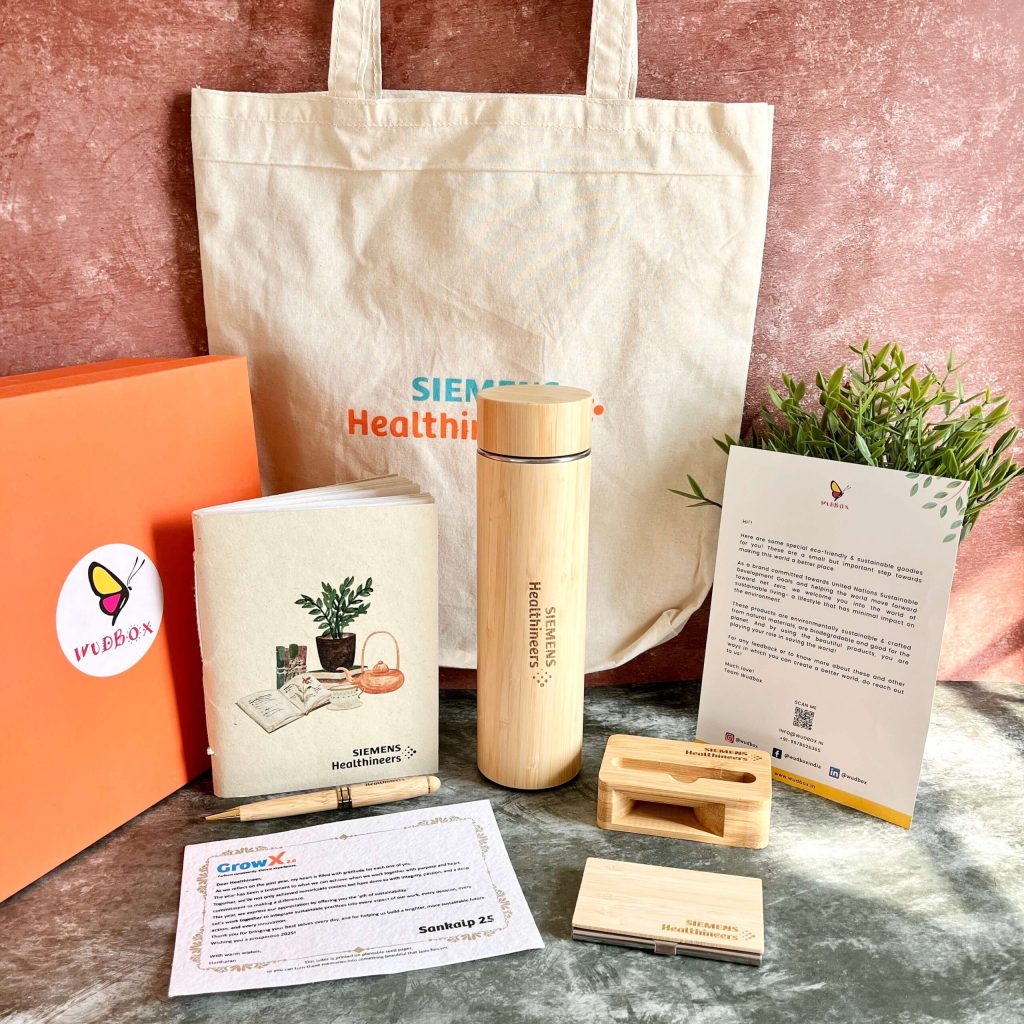
Types of Gifting Options Available
- New Hire Onboarding Kits: Branded stationery, tech peripherals, and apparel to welcome talent.
- Service Excellence Awards: Premium mementos or trophies for tenure and performance.
- Festive & Seasonal Hampers: Curated boxes for Diwali, New Year, or Eid that celebrate cultural milestones.
- Eco-Friendly Luxury: High-end sustainable items like cork desk mats or vegan leather folders.
- CXO Exclusive Gifts: Handcrafted, bespoke items like silver filigree or premium copper-ware for high-value stakeholders.
Benefits: Morale, Recall, and Loyalty
Employee Morale
Physical recognition is a permanent anchor for success. While a bonus is quickly spent, a high-quality branded bag or a desk organizer remains a constant reminder of the company’s gratitude.
Brand Recall
When a client uses your branded power bank daily, your brand achieves thousands of “passive impressions.” It ensures that when they need a service you provide, yours is the first name they remember.
Strategic Loyalty
Gifting creates a “moat” around your business relationships. It transforms a transactional connection into a partnership based on mutual respect and shared history.
Common Mistakes or Misconceptions
1. The “Cheap Swag” Fallacy
Sending low-quality, generic items (like a plastic pen that breaks) is worse than sending nothing. It suggests that you value the relationship as little as the item cost.
2. Ignoring Personalization
A gift that says “Valued Partner” is forgettable. A gift that features the recipient’s name alongside a subtle company logo is a memento they will keep for years.
3. Logistical Afterthoughts
Many companies choose great products but fail on the “last mile.” If a gift box arrives crushed or 10 days late, the emotional impact is lost. Professional kitting and courier management are non-negotiable.
Practical Application Examples
Case Study: The Hybrid Work Solution
A tech firm in Hyderabad gifted “Home Office Wellness Kits” to 500 remote employees.
- The Result: The kits, featuring ergonomic mousepads and copper water bottles, led to a measurable spike in internal engagement scores and a flood of positive LinkedIn “unboxing” posts.
Case Study: The Milestone Retention
A pharmaceutical giant used “Heritage Silver Filigree” mementos to thank clients for a 10-year partnership.
- The Result: The gesture was cited by three major clients during contract renewal as a key reason for their continued trust in the brand’s “thoughtful leadership.”
FAQs (Operational Focus)
1. How long does the corporate gifting process take? For standard kits, allow 7–10 days. For bespoke, handcrafted, or large-scale custom orders, a 3–4 week lead time is recommended to ensure quality control.
2. Is corporate gifting tax-deductible in India? Yes, most corporate gifts can be classified as business promotion or staff welfare expenses, making them deductible under the Income Tax Act.
3. Can we send gifts to individual employee addresses? Absolutely. Individual fulfillment (drop-shipping) is a core part of how modern corporate gifting works, especially for decentralized or remote teams.
4. What branding method is most durable? Laser engraving on wood, metal, or glass is the most durable and prestigious. For fabrics, high-density embroidery or premium heat transfers are preferred.
5. How much should we spend per gift? Budgets vary: ₹800–₹1,500 for general festive gifting; ₹2,000–₹5,000 for onboarding; and ₹10,000+ for premium executive mementos.
6. Do you provide eco-friendly packaging? Yes. Modern gifting avoids plastic. We use FSC-certified cardboard, honeycomb paper wrap, and natural fillers to ensure the packaging matches the sustainable gift.

Conclusion: Strategic Guidance for Decision Makers
Understanding how corporate gifting works is the first step toward building a more resilient brand. It is a transition from “buying stuff” to “investing in people.” In the competitive landscape of Hyderabad, the companies that thrive are those that realize every gift is a silent conversation with their most important stakeholders.
By focusing on quality, personalization, and seamless logistics, you ensure that your brand’s voice is heard—long after the gift has been opened. At VsorsTech, we help you master the mechanics of this process, turning every box into a bridge.



Leave a Comment